
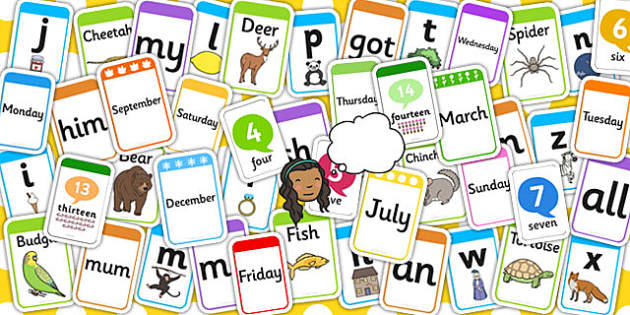
Your child can name every letter on a flashcard deck in under thirty seconds. But hand them a book with the word “cat” on the page and they stare at it like a stranger. After months of drilling, you have a child who recognizes isolated letters but cannot combine them into a single word. The problem is not effort — it’s method. An english phonics course teaches the system behind reading. Flashcards teach labels for symbols.
This post breaks down why flashcard recognition does not transfer to real reading, what a structured phonics program actually trains the brain to do differently, and how to make the switch without starting over.
Why Can My Child Name Every Letter but Not Read a Word?
Recognition and decoding are fundamentally different cognitive tasks. When your child looks at a flashcard with the letter B, they retrieve a stored label — “B.” That is visual recognition, the same process they use to identify a dog or a red truck. It does not require any understanding of what B does in a word.
Decoding is the opposite direction. It requires the child to see a letter, recall its sound, hold that sound in working memory, see the next letter, recall its sound, blend the two sounds together, then continue through the entire word. That is a multi-step process that flashcards never practice.
A child who can name all 26 letters has memorized 26 labels. A child who can decode has learned a generative system that unlocks thousands of words.
This is why parents feel stuck. The flashcard drill looks like progress — the child responds quickly and confidently. But that speed is recognition speed, not reading speed. A structured english phonics course trains decoding from the first lesson, so the child builds the skill that actually transfers to a printed page.
How Do Flashcards and a Phonics Course Compare?
Flashcards Versus Structured Phonics Course
| Criteria | Flashcards | Structured Phonics Course |
|---|---|---|
| Cognitive process | Visual recognition (label retrieval) | Decoding (sound-letter mapping + blending) |
| Transfer to real reading | Low — child names letters but cannot combine them | High — child applies system to any new word |
| Parent effort required | Parent must run every session manually | Built-in progression; posters provide passive reinforcement |
| Passive reinforcement | None — cards go back in the box after drill | Posters stay on the wall, reinforcing sounds throughout the day |
The table reveals the core difference. Flashcards engage a retrieval loop with no generative output. A phonics program builds a production system the child carries into every reading encounter.
What Myths Keep Parents Stuck on Flashcards?
“Letter recognition is the first step to reading.”
Letter recognition is a step, but it is not the bottleneck. Most children can learn letter names passively through books, toys, and environmental print. The bottleneck is phonemic awareness — the ability to hear, isolate, and manipulate individual sounds in spoken words. A phonics program trains phonemic awareness directly. Flashcards skip it entirely.
“My child just needs more repetitions.”
If the problem were volume, your child would already be reading. They have seen each flashcard hundreds of times. The problem is that repetition of the wrong task does not build the right skill. Repeating letter names does not teach blending. Only blending practice teaches blending.
“Flashcards worked for the alphabet, so they should work for words.”
Alphabet knowledge and word reading use different brain circuits. Naming a letter is a one-to-one lookup. Reading a word requires sequential processing, working memory, and sound synthesis. Programs designed to learn to read english teach all three of these skills in a logical order that flashcards cannot replicate.
How Do You Transition From Flashcards to a Phonics Course?
You do not need to throw out everything your child already knows. Letter knowledge gives them a head start. Here is how to build on it.
- Stop drilling letter names in isolation. Your child already knows them. Continuing adds no new reading ability.
- Introduce letter sounds first. Shift from “This is B” to “B says /b/.” A phonics program will sequence this for you, starting with the highest-utility sounds.
- Practice blending from day one. As soon as your child knows two or three letter sounds, combine them into simple words. The word “at” uses only two sounds. Add a consonant and you get “sat,” “mat,” “bat.” This is where reading begins.
- Use posters or visual aids that stay visible. Unlike flashcards that go back in a drawer, wall posters provide ambient reinforcement throughout the day. Every time your child walks past the poster, they get a micro-review without you running a session.
- Follow the program’s sequence. Resist the urge to jump ahead. Each lesson in a well-designed phonics program builds on the previous one. Random order — which is what flashcards teach — is the opposite of what the brain needs for systematic decoding.
- Keep sessions short. Five to ten minutes of structured phonics practice produces more reading progress than thirty minutes of flashcard drilling because every minute is spent on the skill that matters.
Frequently Asked Questions
How long does it take to see results after switching from flashcards to a phonics course?
Most parents notice their child sounding out simple words within two to four weeks of consistent practice. The letter knowledge from flashcard work is not wasted — it gives the child a head start on connecting names to sounds. The new skill is blending, and that clicks faster than most parents expect.
Can I still use flashcards alongside a phonics program?
You can, but change how you use them. Instead of asking “What letter is this?” ask “What sound does this letter make?” Better yet, show two or three letter cards in sequence and ask the child to blend them into a word. This turns a recognition tool into a decoding tool.
What age is best to start a phonics course?
Children as young as two can begin learning letter sounds through a structured program. A program like Lessons by Lucia is designed for early learners, using posters and progressive lessons that match the developmental stage of toddlers and preschoolers.
What if my child resists the change from flashcards?
Children resist unfamiliar routines, not harder ones. Keep the first few phonics sessions very short — three to five minutes — and let the child experience success with simple blending tasks. Once they realize they can read a real word, motivation shifts from external (parent-led drill) to internal (the thrill of decoding).
The Longer You Wait, the Wider the Gap
Every month spent drilling flashcards is a month your child practices the wrong skill. Letter recognition does not evolve into decoding on its own — no amount of repetition closes that gap. Meanwhile, children in structured phonics programs are sounding out words, building confidence, and developing the neural pathways that fluent reading depends on. The switch takes one decision and costs nothing you have already built. Your child’s letter knowledge becomes an asset the moment it connects to sounds instead of names.
